
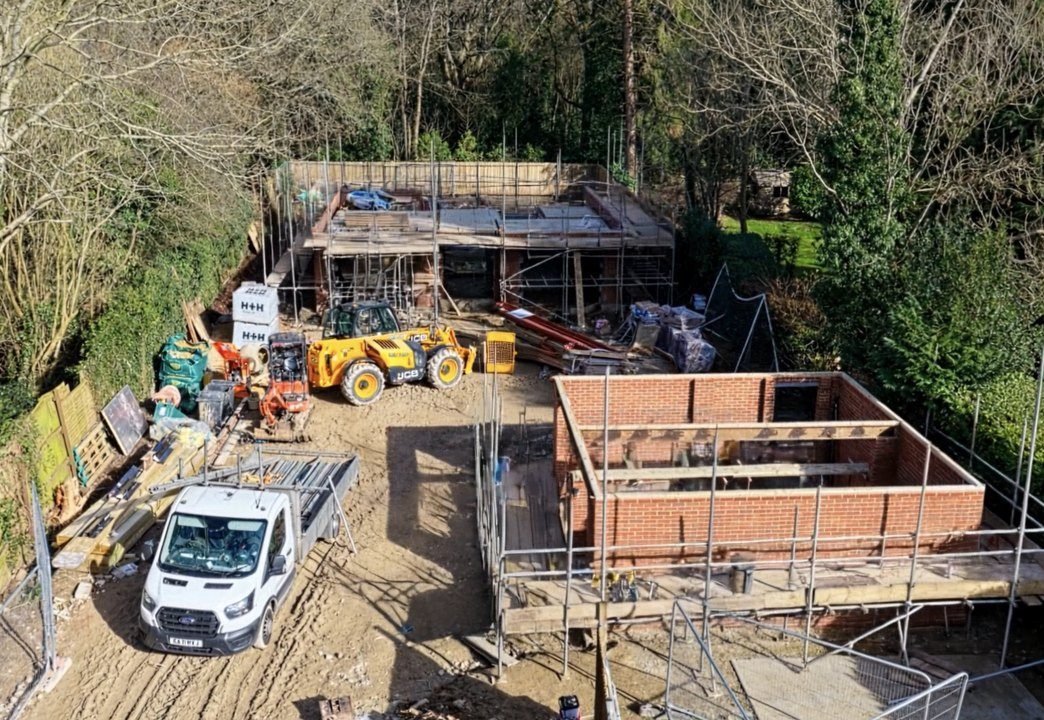
The best time to plan a construction film is before the site begins to change. By the time a development is ready for handover, its earliest stages are gone. A simple filming plan gives construction companies and developers a way to preserve that journey and make each visit useful.
Whether you are building homes in Kent, completing a commercial fit-out or managing several developments, start with the decisions the footage needs to support. Progress reporting, stakeholder communication and launch marketing overlap, but they do not always need the same shots.
Start with three questions
Who needs to see the content? What do they need to understand? When do they need it? An investor update may need a clear overview before a monthly meeting. A contractor case study may need the people and processes behind a difficult phase. A sales team will want the finished spaces presented at their best.
Write those purposes into the brief. Agree who approves the footage and which material is for internal use only. This avoids treating every site visit as an open-ended request to capture everything.
Record a baseline before work changes the site
A baseline visit can show the existing buildings, access and surrounding context before major work starts. Choose repeatable aerial viewpoints and useful ground-level positions. Keep a simple record of each viewpoint so later visits can show the same part of the project.
Where the site has already started, begin with the current stage. An honest record from today is more valuable than trying to suggest you captured earlier work that was missed.
Combine regular updates with key milestones
A fixed monthly schedule is easy to organise, but it may miss an important change between visits. Discuss major stages with the project team and decide which are worth a dedicated shoot. These might include a structural milestone, a significant installation or the first completed show space.
For each visit, capture the repeat views first, then the details that explain what has changed. Dated folders, consistent filenames and short notes from the site team make the footage easier to find and interpret months later.
Choose the right kind of time-lapse
A sequence made from repeat drone visits can reveal a project's transformation from above. A fixed-camera time-lapse can record more frequent changes from one position. They are different methods and can complement each other.
Choose according to the story you need to tell, the duration of the work and the practical setup. Do not assume that a monthly drone visit will capture every operation or provide a continuous record. Agree the expected result and coverage gaps before work begins.
Plan filming around a working site
Give the operator the site location, a contact person, access arrangements and information about changing work areas. Discuss cranes, neighbouring properties, people and vehicle movements before filming. The proposed shots should fit a safe plan agreed with the site team.
Check the operator's insurance and the documentation relevant to the proposed flight. UK drone operations must follow the applicable CAA rules; requirements depend on the operation. The CAA's drone guidance is the authoritative starting point. Do not assume that one qualification makes every location or flight suitable.
Agree what arrives after each visit
Specify the number and type of edited images, the purpose of any short film, the delivery date and how feedback works. Confirm whether captions, annotations and social versions are included. Separate a visual progress record from technical survey or inspection deliverables, which need their own scope and expertise.
At handover, the archive can become a completion film connecting the original site, the build and the finished spaces. Pair aerial footage with ground-level detail and, where appropriate, an FPV walkthrough to explain the result.
Plan your construction filming in Kent
Marq One Studios helps construction and development teams create a useful visual record from first visit to final reveal. View our construction filming services and time-lapse example, then send us your site location, programme and key milestones. We can discuss a practical capture plan built around your project.