
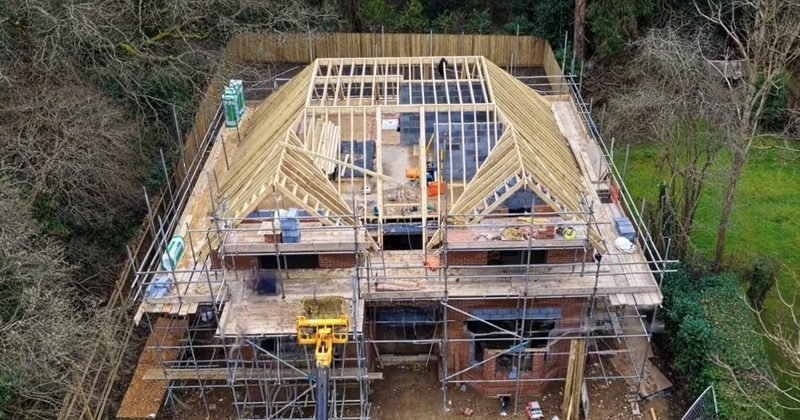
A site manager can walk a project every day and still struggle to show someone elsewhere how the whole development is changing. Ground-level photographs capture individual jobs, but they rarely show the relationship between buildings, access routes and the wider site. That is where construction drone photography becomes useful.
For construction companies in Kent, regular aerial coverage can create a dated visual record that supports progress meetings, client updates and the eventual handover. Its value comes from capturing the right views consistently, then organising them so people can actually use them.
Show the whole site in one clear view
An aerial photograph can put several work areas into context at once. A client can see how the structure relates to the access road, where landscaping is developing and which external areas are still being worked on. That shared view makes a conversation easier to follow than a collection of disconnected close-ups.
It also helps people who are unfamiliar with the site. Labelled viewpoints and simple annotations can explain what they are looking at without expecting them to interpret every detail of a programme or drawing.
Make progress comparisons meaningful
The most useful progress record is planned before the first flight. Agree a small set of viewpoints and repeat them as closely as practical on later visits. Keep the date and direction clear, and retain enough surrounding detail to orient the viewer.
For example, a developer could compare the same overview at groundworks, structural completion and landscaping. The images show visible change; the accompanying site update explains what has been completed, what is underway and what comes next. Photographs alone should not be treated as proof of hidden works, workmanship or compliance.
Give remote stakeholders a useful update
Directors, clients and investors may be following several projects. A concise package of dated stills and a short progress film gives them material they can review ahead of a meeting. It can reduce the need for some visits made purely to see progress, while leaving technical inspections and decisions with the appropriate project team.
Keep the update focused. A clear overview, a handful of milestone images and an explanation from the site team are usually more useful than a large folder with no labels.
Build a record you can use after completion
Once a phase is covered up or a structure changes, the opportunity to film it has passed. Capturing key stages creates material for a completion film, a contractor case study or a future tender presentation. It shows the journey behind the finished building.
Repeat aerial visits can also form a start-to-finish progress sequence. This is different from a fixed camera recording continuously: the right approach depends on whether you need selected milestones or a more detailed time-lapse record.
Choose the frequency around the programme
Monthly visits may suit a steady phase, while faster changes can justify closer coverage or visits timed to milestones. Share the programme, reporting dates and site constraints with the operator. Weather and access can affect filming, so allow flexibility around important stages.
Ask for a clear capture plan, agreed file formats and an organised delivery structure. If you need measurements, mapping or survey outputs, specify those separately; ordinary promotional photography is not a measured survey.
Construction drone photography in Kent
Marq One Studios is based in Herne Bay and creates drone, FPV and ground-level films for construction and development projects. Explore our construction progress filming and aerial photography, including a start-to-finish example, or tell us about your site and programme. We can shape the coverage around the updates your team needs.